Set up a practice table
Use a standard deck without jokers for this basic exercise. Give each learner three face-down cards. Agree that all counters are valueless and that no prize or financial stake is involved. App variants may change the rules; this is a learning example, not a description of an untested app.
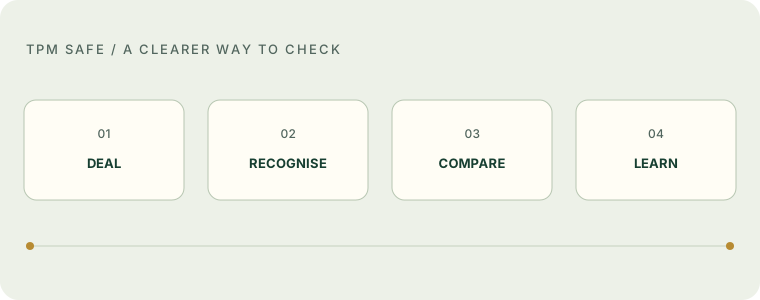
Walk through a learning round
Players can look at their cards (“seen”) or leave them unseen (“blind”). On a turn, a player may leave the round, commonly called pack, or continue under the agreed table rules. At a permitted comparison or final reveal, use the agreed hand order to resolve the result.
For a first exercise, skip counters entirely. Deal three cards to each learner, turn them over, name the category and explain the comparison. This isolates the part beginners most often misunderstand.
A worked example without stakes
Anita has 8♠ 8♥ Q♦. Ravi has 4♣ 5♥ 6♠. Anita has a pair; Ravi has a sequence. The sequence category ranks above the pair category, so Ravi’s hand is higher under the basic order. The queen in Anita’s hand does not let the pair beat a sequence.
Next give Anita 8♠ 8♥ A♦ and Ravi 8♣ 8♦ K♠. Both have eights as their pair. The unmatched ace is higher than the king, so Anita’s hand is higher. Compare the pair first; the odd card matters only when the pairs tie.
Terms you will encounter
| Term | Plain-language meaning |
|---|---|
| Pack / fold | Leave the current round. |
| Boot / ante | An initial contribution in traditional rules; use no-money counters only in this exercise. |
| Chaal | A turn or action under the table rules. |
| Show | A permitted comparison of remaining hands. |
| Sideshow | A comparison option whose conditions vary. |
| Trail / trio | Three cards of the same rank. |
Confirm sequence ordering, ties, show conditions and any wild cards before a table begins. Do not infer an app’s exact mechanics from its name.
A useful learning sequence
- Learn the six hand categories before the turn terminology.
- Practise comparisons with all cards visible.
- Read the agreed blind/seen rules, using counters with no value if needed.
- Stop when practice is no longer enjoyable. There is no financial objective and no need to chase a result.
References and limitations
Source-based information and original teaching examples. No app-specific file test or professional legal review is claimed.